Standby Generator, Battery, or Neither: Backup Power in the Roanoke Valley
Generators win the long winter outage because they run as long as you feed them fuel. Batteries win the short, frequent flicker because they are silent and instant. Solar alone does neither without storage. Plenty of Roanoke Valley homes need neither one.
The Roanoke Valley sits in a bowl, Mill Mountain on one side and the Blue Ridge around the rest, and every line feeding the valley crosses that terrain. Summer thunderstorms drop trees on distribution lines. Winter ice does it slower and wider. Two houses fifteen minutes apart can have completely different outage histories, and that matters more than any product comparison.
We install both, so we have no reason to steer you toward the bigger number. Sometimes the answer is a generator. Sometimes it is a battery. Often, after we walk the house and hear the outage history, it is neither.
Start With What Your Address Actually Does
Most people decide about backup power off a feeling. One bad week two winters ago sticks in memory and becomes a belief that the power here is unreliable. Sometimes it is. Often it was one storm.
Get the real number before you price anything. Outage records are tied to your meter, so call your utility and ask what they show for your service address over the last several years: how many interruptions, and how long each ran. Ask neighbors on your line, not the ones across the highway on a different circuit.
Where a Standby Generator Wins
A standby generator is an engine on a pad outside, tied to natural gas or propane and wired through an automatic transfer switch. The utility drops, the switch senses it, the engine starts, and the house comes back in seconds. Nobody has to be awake for any of it.
The real advantage is runtime. As long as fuel keeps arriving, it keeps running. A January ice storm that takes a county line down for days is exactly what a generator handles, at night, in the cold, with no sun. Sized properly it carries the whole house. Sizing is a load calculation, and we do it on site. Details are on our Roanoke whole-home generator page.
What a Generator Asks of You
It is an engine, and engines want attention. Oil, filters, a start battery that dies every few years, a weekly self-test that runs whether you are home or not. Skip that for three years and the day you need it is the day you learn it will not start.
It is also loud, outdoors, where the neighbors are. On a half-acre county lot that is a non-issue. On a tight lot in Old Southwest, where houses sit close and the side yard is a walkway, it can be disqualifying. The unit needs clearance from windows, doors, vents, and the property line, and exhaust cannot have a path back inside.
The Case for a Battery
A battery is the opposite machine. Silent, no engine, no oil, no fuel line, nothing to service. It hangs on a wall or sits in the garage, which solves the placement problem that kills generators on tight lots. And it does not start, because it is already on.
For the frequent short outage, the ninety-minute flicker after a storm crosses the ridge, a battery is flatly the better tool. It also pairs with solar, and that pairing changes the math on a longer outage, because a battery recharging from a roof array each day is not limited to one tank.
Where a Battery Runs Out
A battery holds a fixed amount of energy, and when it is gone it is gone. That fact drives everything else. It makes a battery a critical-loads decision rather than a whole-house one, because a heat pump, a well pump, and an electric range empty it fast. It also makes the multi-day January outage its worst case: short days, weak sun, peak heating load, and nothing that can refill it.
Solar Alone Will Not Keep Your Lights On
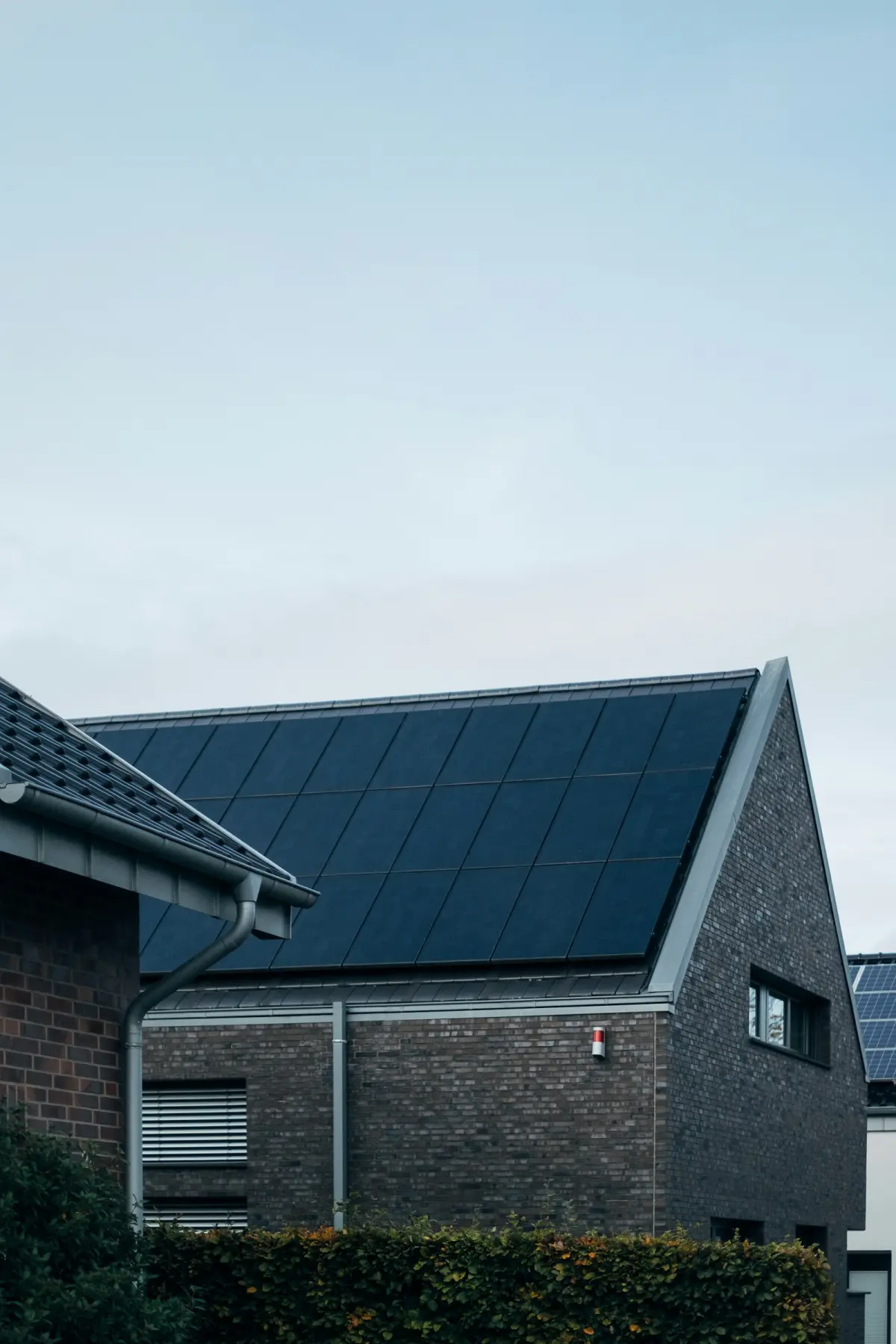
This one surprises almost everybody. A grid-tied solar array shuts down during an outage. That is not a defect and not a setting somebody forgot to flip. The inverter has to disconnect so it cannot backfeed the line while a lineman is working on it. Your roof can be in full sun at noon while your house sits dark. To ride out an outage on solar, you need storage.
Picking Which Circuits Actually Matter
Critical loads are a short list, and writing it down shrinks this decision to its real size. Start with what causes damage if it stops: the well pump, the sump pump, the heat pump or furnace controls, and the refrigerator. Add what keeps the house livable: a few lighting circuits, the internet, and outlets for phones and medical equipment. The electric range, dryer, and water heater force a system up in size, and most families can work around them for two days. That sorting is also the conversation that decides whether a panel upgrade comes first.
City Circuit, County Line, and Fuel at Your Address
Where you sit in the valley narrows this fast. City circuits in Roanoke tend to be shorter, easier to reach, and higher on the restoration list, and natural gas is often already at the curb. That favors a generator if you want one, since fuel arrives by pipe rather than by truck. County lines running through trees are a different animal: longer runs, harder access, more time before a crew gets to you. Outages there come less often and last longer, and propane means a tank, a pad, and a delivery schedule. No gas and nowhere for a tank narrows it for you. We work the whole valley from the Roanoke service area page.
Plenty of Homes Need Neither
Here is the part nobody selling equipment says out loud. If your address loses power twice a year for under two hours, you do not need backup power. You need good lanterns, a battery bank for phones, and a plan for the refrigerator. We would rather say that at the kitchen table and come back when something changes: a medical device in the house, a home office you cannot lose, or a move out to a county line that goes down every winter.
Josh does the work himself. The man across the table from you is the one wiring the house, and we do not make promises we cannot keep.
Roanoke Valley Backup Power FAQ
Will my solar keep the lights on in an outage?
Not by itself. A grid-tied array is required to shut down during an outage so it cannot backfeed the line. Add storage and the switching gear that islands your house, and it will.
Generator or battery for a multi-day winter outage?
Generator. Runtime is the whole question, and an engine keeps going as long as fuel arrives. Short January days are the worst case for a battery, and there is no truck that refills one.
Can a generator fit on a small city lot?
Sometimes, and sometimes not. The pad needs clearance from windows, doors, vents, and the property line, plus exhaust that cannot reach the house. On tight Old Southwest lots we often end up recommending a battery instead.
How do I know I need backup power at all?
Pull your outage history by service address, then count. Two short interruptions a year is a lantern problem. Several long ones, or a medical device in the house, is a system problem.
Talk It Through Before You Buy Anything
Josh Smith is a Navy veteran and a certified electrician, six years in business, and he will tell you when the answer is no.
Wire Up a Quote (603) 777-2596