Lynchburg ERV Installation
Lynchburg houses span a century and a half of construction habits, and almost none of them were built to ventilate on purpose. HOLISTIQ installs Zehnder energy recovery ventilation systems across the Hill City, from renovated Rivermont foursquares to new builds out Graves Mill Road, delivering filtered fresh air to every room while recovering up to 95 percent of your conditioning energy. Twenty minutes from our Goode shop.
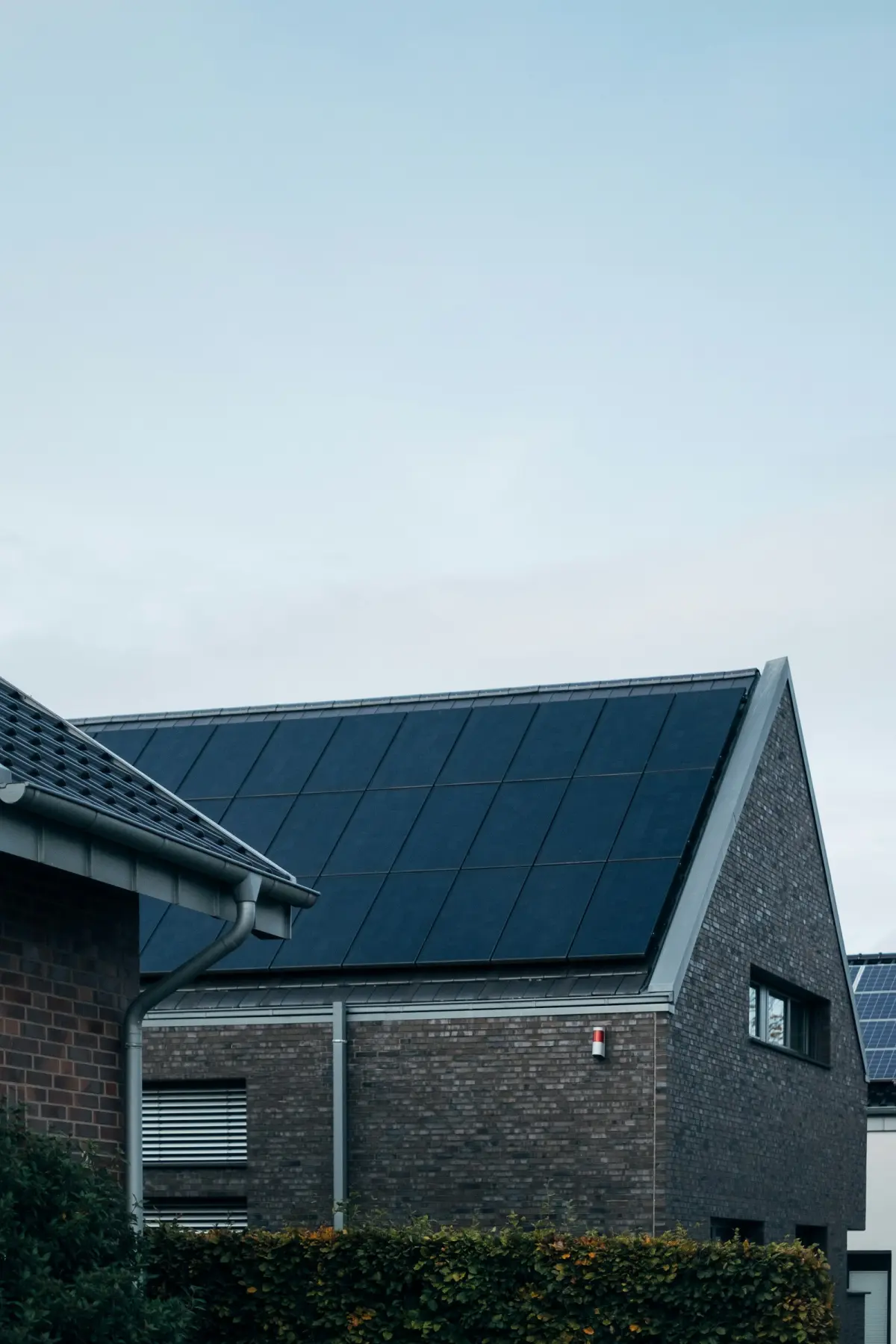
Old Houses That Got Tight, New Houses Born Tight
Every house needs to exchange its air with the outdoors. The only questions are how, how much it costs, and what rides in with the fresh air. Lynchburg’s renovation wave created a ventilation problem nobody planned for. A 1920s house in Rivermont or Boonsboro originally breathed through its own gaps: loose windows, uninsulated walls, a chimney pulling air up the middle. Then came the renovation: new windows, spray foam, sealed crawl space, maybe a heat pump conversion. The house got dramatically cheaper to condition and dramatically worse at exchanging air. Owners notice it as morning condensation on the new windows, a stale smell in closed bedrooms, and allergies that stopped improving indoors.
New construction on the Wyndhurst and Graves Mill side of town has the same condition from day one, because current code produces tight envelopes by default. Either way, the fix is the same machine. An energy recovery ventilator continuously exhausts stale air from kitchens and baths, supplies filtered outdoor air to bedrooms and living spaces, and passes the two streams through a core that recovers up to 95 percent of the heating or cooling energy. The house stays efficient and finally gets the fresh air it was never built to provide.
Josh installs Zehnder systems, the equipment high-performance builders specify when air quality is the actual goal rather than a code checkbox. He is one of the few Zehnder America certified installers in Virginia, and Lynchburg is his closest city: our shop in Goode sits twenty minutes up Route 221. Finished installs are in the gallery.
How a Lynchburg Retrofit Actually Goes
The first visit is a walkthrough. Josh maps where Zehnder’s semi-rigid distribution tubing can route: joist bays under the floor, closet chases, the attic plane. Older Lynchburg homes usually have more routing paths than owners expect, because balloon framing and generous closets leave cavities modern tract homes lack. You get a written quote naming the unit, the register count, the routing plan, and exactly what drywall or plaster gets touched.
Installation in a finished home runs two to three days. Supply registers land in bedrooms and living areas, exhaust points in the kitchen, baths, and laundry. The unit itself lives in a basement, utility room, or conditioned attic. Commissioning closes the job: airflow measured and balanced at every register, with a report showing the system performs to its specification. If your renovation also involves rewiring or a panel upgrade, Josh is a licensed electrician and can fold that work into the same project instead of handing you off to another contractor.
For new builds, get us the plans before drywall. ERV rough-in during framing costs less and performs better than any retrofit, and we coordinate directly with your builder’s schedule.
One Lynchburg-specific note on unit placement: the city’s hillside lots produce a lot of walk-out basements and half-story attics, and both make excellent homes for the ERV unit itself. A conditioned basement mechanical corner keeps filter changes at eye level instead of up a ladder, which sounds trivial until you are the one doing it twice a year for the next twenty years. We factor that into every layout.
Lynchburg’s mix of old and new keeps the work varied. In a week we might route tubing through the joist bays of a hundred-year-old Rivermont foursquare, rough in an ERV during framing on a new house near Wyndhurst, and retrofit a 1990s ranch in Timberlake whose owners finally got tired of the winter window fog. Each of those houses breathes differently, so each gets its own design rather than a copied template. That is the part a certified installer earns his keep on, and it is why Josh does the walkthrough himself instead of sending a sales rep with a clipboard.
The single-installer approach also keeps a Lynchburg job honest. When one person designs, prices, installs, and commissions the system, there is no gap for a corner to get cut and no finger to point when a register underperforms. The commissioning report at the end is not a formality; it is the proof, in measured numbers, that the house is getting the air exchange it paid for. If a value ever drifts, the person who set it is the person who comes back to fix it, and he is twenty minutes down Route 221.
Beyond the Hill City
ERV work runs throughout the region: Bedford · Forest · Roanoke · Charlottesville, plus travel projects into Maryland and North Carolina where certified installers are hard to find. Residential and commercial scopes both, detailed on the residential and commercial ERV pages.
Lynchburg ERV Questions
Can an ERV go into an older Lynchburg house?
Yes, and renovated older homes are some of our best candidates. A Rivermont or Fort Hill house that just got new windows, air sealing, and insulation has lost the accidental ventilation it relied on for a century. Zehnder’s small-diameter tubing routes through existing joist bays and closets, so we can add balanced ventilation without tearing the plaster apart. Two to three days of work in most cases.
How does Lynchburg’s climate affect the ERV choice?
The James River valley gives Lynchburg humid summers and enough winter to matter. That combination is exactly why we install ERVs rather than heat-only HRVs here: an ERV transfers moisture as well as heat, so it sheds humidity from incoming summer air and keeps winter air from arriving bone dry. One machine, correct for both halves of the year.
What does an ERV installation in Lynchburg cost?
Pricing follows the house: square footage, number of supply and exhaust points, and whether we are working in open framing or a finished home. You get a written quote with the exact Zehnder system specification before anything is scheduled. Call (603) 777-2596 and Josh will look at the house and give you a real number, not a range off a postcard.
Do you coordinate with Lynchburg renovation contractors?
All the time. The cleanest ERV retrofits happen while a renovation already has walls open, so if your contractor is gutting a kitchen or finishing a basement, that is the moment to call. We handle the ventilation design and installation, coordinate rough-in with your GC’s schedule, and come back for commissioning after finishes.
Will the ERV help with pollen season?
Noticeably. Every cubic foot of incoming air passes through filtration before it reaches a bedroom, which captures most pollen and airborne dust. During a Lynchburg spring, that is the difference between the house tracking the outdoor pollen count and the house staying clear while the cars outside turn yellow. Ask through the contact page if you want to talk filtration grades.
We are converting to a heat pump. Should the ERV go in at the same time?
If the timing lines up, yes, and Lynchburg homeowners doing the heat-pump swap are some of our best-fit projects. The heat pump makes the case for the ERV even stronger, because a tight, all-electric house needs controlled fresh air more than a leaky gas-heated one did. Since Josh is a licensed electrician, we can handle the panel work the heat pump and ERV both draw from and land everything on properly sized circuits in one coordinated project instead of three separate contractors tripping over each other.
More HOLISTIQ Work in Lynchburg
Twenty Minutes Away, No Broken Promises
Book a walkthrough and get a straight answer on whether your Lynchburg house needs an ERV, from the person who would install it.