Smith Mountain Lake EV Charger Installation
Charging an electric vehicle at a lake house is a different problem than charging one at home. The car shows up Friday night with a battery that has already covered the drive out, the parking spot is often nowhere near the panel, and the equipment has to survive humidity coming off 22,000 acres of open water. We come up from Goode, walk the property, and wire it to hold.
Charging at a House You Drive To
Most of the charging work we do around the lake is for people whose primary address is somewhere else. Smith Mountain Lake has been a premier recreational and second-home destination since Appalachian Power dammed the Roanoke River in 1963 and filled 22,000 acres behind it, and a good share of the shoreline belongs to families who come out on weekends and holidays rather than every night. That pattern changes what you actually need out of a charger.
So the first thing we do on a lake job is ask where you drive in from and how long the vehicle stays put. That answer decides the amperage, and the amperage decides the wire size, the breaker, and whether your existing service can absorb the load without being torn out. Getting the sequence right in that order is what keeps the price honest. Josh writes it down, hands it to you, and the man who sat at your table is the one who shows up with the conduit.
Getting Power to the Garage
Detached garages and outbuildings are ordinary on lake lots. The house sits where the view is, and the parking ends up wherever the grade allowed a slab. That distance between the meter and the vehicle is the single largest variable in a lakeside charging job, and it is the reason two neighbors on the same cove can be quoted very differently for what looks like identical work.
Where the outbuilding already has power, we check what feeds it before touching anything else. A small structure wired decades ago for a light and a receptacle is frequently carrying an undersized feeder that will not support a vehicle circuit, no matter how much room the little panel inside appears to have. In that case the honest answer is a new feeder, not a charger bolted onto a conductor that was never sized for a continuous load.
Where there is no power at all, we trench and run underground in conduit rated for direct burial, land it on a properly bonded subpanel, and branch the vehicle circuit from there. On sloped shoreline lots the trench route matters as much as its length, because septic fields, well lines, irrigation and existing dock feeds are all buried out there too. We locate before we dig. That is slower on paper and considerably faster than repairing somebody’s water line.
Checking the Service First
Lake homes pull more current than their square footage suggests. Boat lifts cycle, dock lighting runs from dusk until whenever someone remembers it, and summer air conditioning works hard in a house that gets opened up and cooled down from scratch every time the family arrives. Higher than average electric usage is normal here, and it is already sitting on the same service you are about to hang a vehicle charger on.
That is why we open the panel and do arithmetic before we quote hardware. We add up the fixed loads, apply the demand factors the code allows, and compare the result against what the service can carry. Plenty of shoreline houses come through that calculation with room to spare. Others were built when a lake place meant a cabin with a window unit, and they have been absorbing additions ever since without anybody revisiting the main.
Finding that out on a Tuesday with a meter in hand costs you a conversation. Finding it out later, when the main breaker drops on a July evening with the lift running and the house full of people, costs considerably more than that. Both outcomes are on the table for older shoreline services, and only one of them is something we can hand you in writing ahead of time.
Load Management Before a Service Upgrade
When the calculation says there is not enough headroom, the reflex answer is to replace the service. Sometimes that genuinely is correct, particularly if the equipment is aged out or the panel has no physical space left. Frequently it is overkill, and there is a smaller piece of hardware that solves the same problem for a fraction of the disruption.
Load management devices watch the total current coming into the house and reduce the vehicle circuit when everything else spikes. The heat pump kicks on, the water heater recovers, the lift runs, and the charger quietly steps back until the demand passes. Because it is dedicated to a car that is going to sit until Sunday anyway, that pause costs you nothing you can perceive, and it keeps the whole installation inside what the service is rated to carry.
The practical difference matters most at a second home. A service replacement means utility coordination, a meter disconnect, a county inspection and somebody physically present for all of it, which is awkward when you live an hour or more away. A managed circuit is usually one visit. We will tell you plainly which of the two your property needs, and if the honest answer is the larger job, we will say that instead of selling you a workaround that fails in three years.
Equipment That Survives Lake Humidity
Air near this much water carries moisture that inland properties never deal with in the same volume, and it works on electrical equipment continuously. Enclosures that are merely painted metal find their way to rust at the seams. Connections that were adequately snug develop corrosion at the terminals. Anything mounted on a wall facing the water takes the worst of it, season after season.
We specify accordingly. Outdoor units get enclosures rated for wet locations with the gaskets intact and the knockouts actually sealed rather than plugged with whatever was in the truck. Conduit gets weatherproof fittings, and terminations get an antioxidant compound at the lugs. Where a unit can reasonably live inside a garage or under deep overhang instead of on an exposed elevation, we will suggest moving it, because the cheapest corrosion protection available is not putting the equipment in the weather.
We also hardwire in preference to a cord and receptacle wherever the location is damp or unconditioned. A plug connection is a moving part with contacts exposed to the air, and around here that is a maintenance item waiting to happen. A hardwired unit has no such interface. It costs nothing extra at installation and removes an entire category of callback from a property you are not there to check on.
Put a charger where the car actually parks
We come out from Goode, walk the run, measure the service, and put the whole scope on paper before anything is ordered.
Charging Under an Existing Solar Array
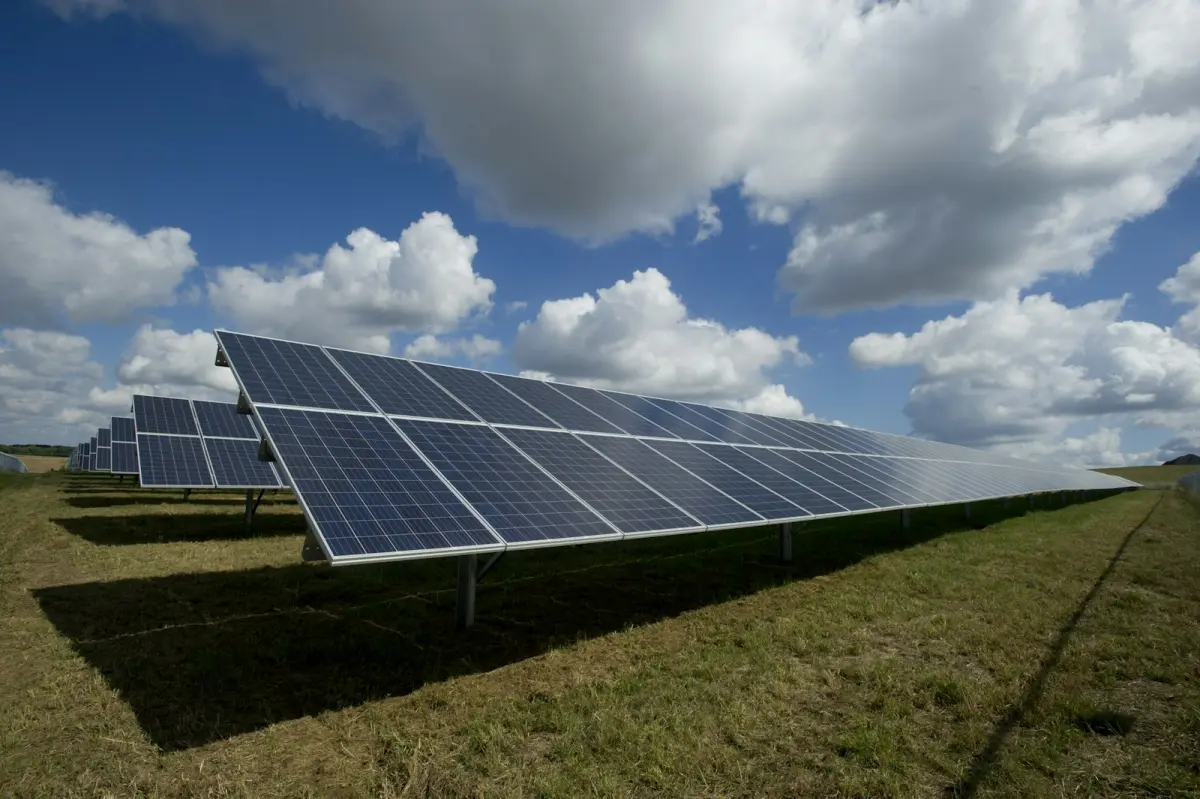
A fair number of shoreline properties already generate their own power, and the open exposure toward the water is a large part of why. When a vehicle charger goes onto a house that already has panels on the roof, the two systems have to be considered together rather than treated as unrelated circuits that happen to share a building.
Timing is the first consideration. Production peaks in the middle of the day, which is exactly when a weekday commuter’s car is somewhere else, but a lake vehicle is often parked in the driveway all Saturday with the sun directly overhead. That is an unusually good match, and a charger that can be scheduled will pull from your own production instead of buying it back later. We set the schedule during commissioning and show you how to change it.
If there is battery storage on the property as well, we talk through whether the vehicle should be allowed to draw from it during an outage. Usually the answer is no, since the point of the batteries is to carry the house, and a car will happily empty them overnight. We configure that boundary deliberately rather than leaving it to whatever the equipment defaults to. Our solar panel installation work and our charging work are done by the same crew, so nothing gets lost between two contractors blaming each other.
Common Questions About Lake Charging
Can you do the work while I am not at the property?
Yes, and we do it regularly for second-home owners. We arrange access ahead of time, send photographs as the work progresses, and meet the county inspector ourselves so you are not driving out for a fifteen minute appointment.
How long does the vehicle actually need to be plugged in?
Less time than most owners assume. A weekend car that arrives with two hundred miles used will recover all of it well before Sunday on a modest circuit. We size to your real driving distance and parking window, which usually means smaller wire and no service work.
My parking pad is a long way from the house. Is that a problem?
It is a cost factor rather than an obstacle. Longer runs need larger conductors to hold voltage, and buried runs need a trench routed clear of septic, well and dock lines. We measure the actual path on site and price the real route, because guessing at distance from a satellite image is how people end up surprised.
Will this work through a power outage?
Not on its own. A charger is a load, so when the grid drops the circuit goes dead along with everything else. Battery storage or a standby generator changes that, though we recommend keeping the vehicle off the backup source so the stored energy carries the house.
Which county permit applies to my address?
It depends on where your shoreline sits. The lake spans Bedford, Franklin and Pittsylvania counties, and each runs its own permit and inspection process. We identify the correct jurisdiction from your address, file with them directly, and handle the inspection scheduling as part of the job.
What does a charger installation cost out here?
It turns on the distance from the panel to the parking spot, what that run passes through, and whether the service has capacity to spare. You get a written quote with every line broken out after we walk the property, and nothing gets ordered before you have read it.
More Lake Electrical Work
All Smith Mountain Lake services · See finished work · Send us the details
Where We Work on the Lake
We cover the shoreline from Goode, roughly thirty-five minutes north on Route 122, and we are out here often enough that the drive is routine. Whether your place sits on the Bedford County side, across the water in Franklin County, or down where the lake reaches into Pittsylvania County, the same crew handles it. Call (603) 777-2596 and we will find a window that fits when you are actually at the house.